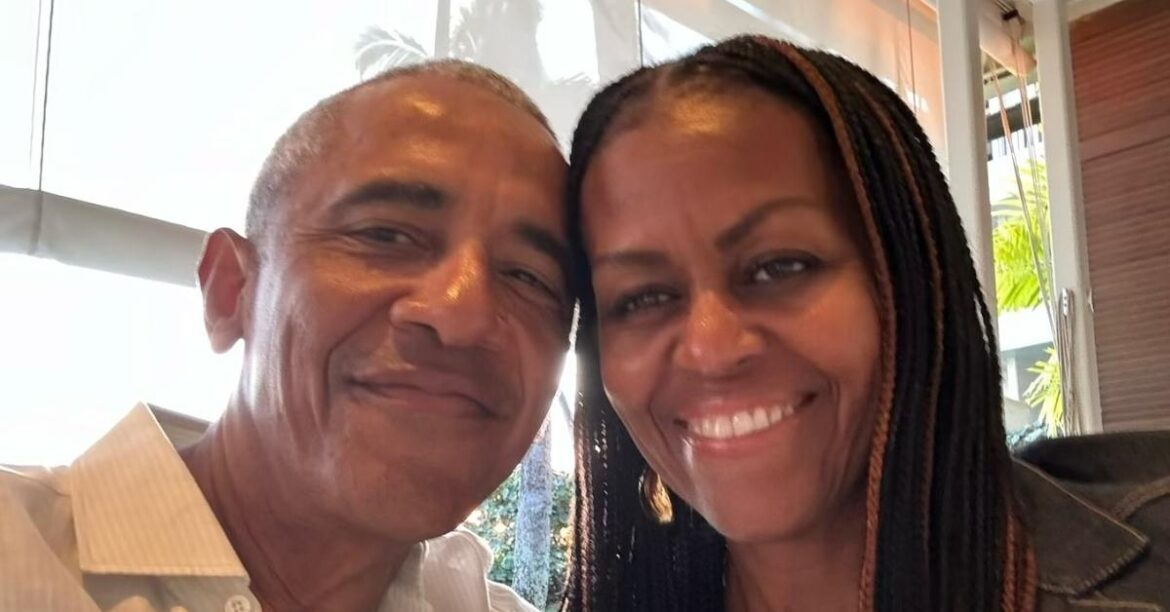
In a recent conversation, a former First Lady opened up about navigating public scrutiny during her time in the White House, offering a pointed defense of one of her husband’s most debated sartorial choices.
She recalled with amusement the widespread controversy that erupted in 2014 when her husband, the then-President, wore a light-colored suit to a formal briefing. While critics at the time labeled the outfit as inappropriate for the office, she had a very different reaction.
“I absolutely loved that suit,” she said. “When I saw him, I thought he looked wonderful.” She viewed the subsequent uproar as a familiar, if absurd, part of political life, noting it occurred near the end of his administration. “By then, we were accustomed to the unusual issues people would fixate on,” she added.
Her own approach to fashion while serving was deliberately measured. She described taking the role of First Lady seriously, consciously ensuring her clothing choices did not overshadow her work or message. “The clothes could never speak louder than anything I had to say,” she explained.
This philosophy extended to ignoring both praise and criticism from fashion commentators. She avoided focusing on opinions about her appearance, whether positive or negative, to maintain her equilibrium. However, she expressed appreciation in retrospect that her accessible style resonated with many women. If an item she wore sold out, she saw it as a positive sign that it was affordable and relatable to a broad public.
She also addressed the specific and often hypocritical critiques she faced, such as commentary on her choice to wear sleeveless dresses. She dismissed such attacks as politically motivated, drawing a comparison to earlier, celebrated First Ladies who made similar style choices without controversy.
Ultimately, she framed incidents like the suit criticism as part of a larger pattern of political theater. “If it wasn’t the clothes, it was something else—a gesture, a word,” she reflected. “It was all part of the same noise.”