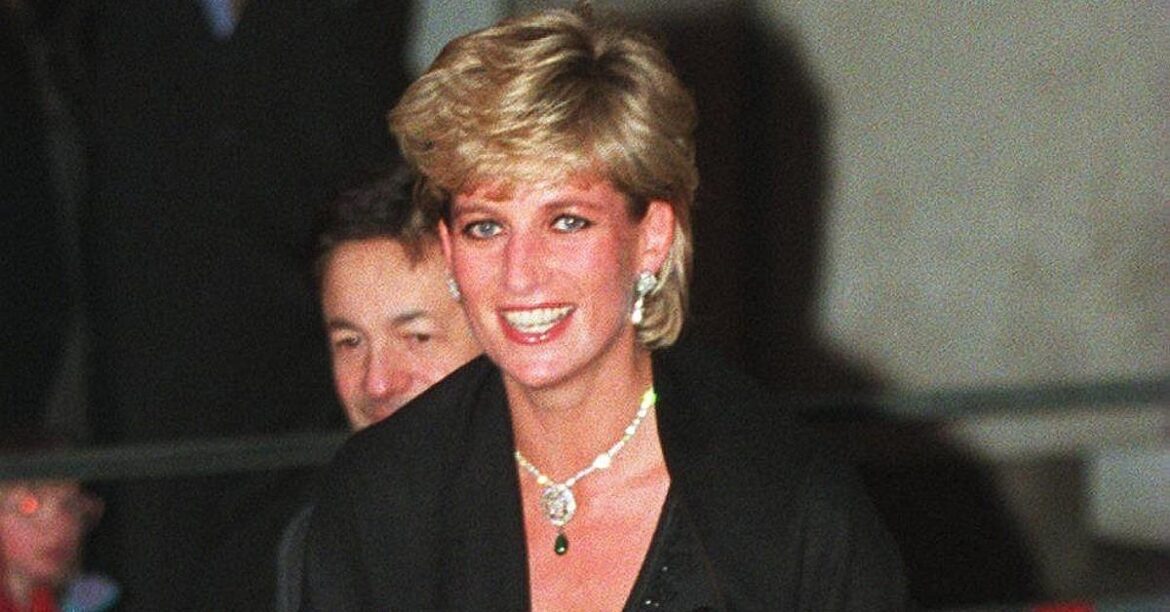
In 1996, the late Diana, Princess of Wales, made a singular and unforgettable appearance at the Metropolitan Museum of Art’s Costume Institute Gala. The event, held mere months after her divorce from the Prince of Wales, was poised to be a defining fashion moment. Yet, according to the designer of her gown, the most iconic statement was made not on the red carpet, but in a private act of rebellion just moments before.
John Galliano, then the newly appointed creative director of Christian Dior, had crafted a navy blue silk slip dress, accented with black lace, for the princess. The original design, part of his debut couture collection for the house, included a structured corset. However, as Galliano recently recounted, Diana had other plans.
Arriving at the event, the designer watched in astonishment as the princess emerged from her car. “She’d ripped the corset out,” he recalled. “She didn’t want to wear it.” The deliberate removal transformed the gown entirely. Without its foundational undergarment, the dress took on a notably more fluid and sensuous silhouette. Galliano noted that Diana “felt so liberated” by her decision, a choice that perfectly encapsulated her independent spirit.
The collaboration itself was marked by the princess’s clear vision. During initial consultations at Kensington Palace, Galliano admitted to “trying to push for pink,” a suggestion Diana firmly dismissed. Her preference for the deep, elegant blue was definitive. For the designer, dressing his “first couture client” was nothing short of a landmark moment, described as “a blessing.”
This instance was far from an isolated event in Diana’s style narrative. She was renowned for using fashion as a powerful, non-verbal language. Two years prior, she captivated global attention by wearing the so-called “Revenge Dress”—a bold, off-the-shoulder black gown by Christina Stambolian—to a high-profile event, a move widely interpreted as a confident statement of self-assurance.
Commentators have long observed that Diana’s approach to style was inherently authentic. She was not a follower of trends but a creator of them, consistently opting for choices that reflected her personal journey and evolving role. Her decision to forgo the corset at the 1996 Gala stands as a poignant metaphor: a deliberate step away from constriction and towards a new, self-defined freedom. It was a quiet but powerful act of autonomy that ensured her lone Met Gala appearance would be remembered for its substance as much as its style.