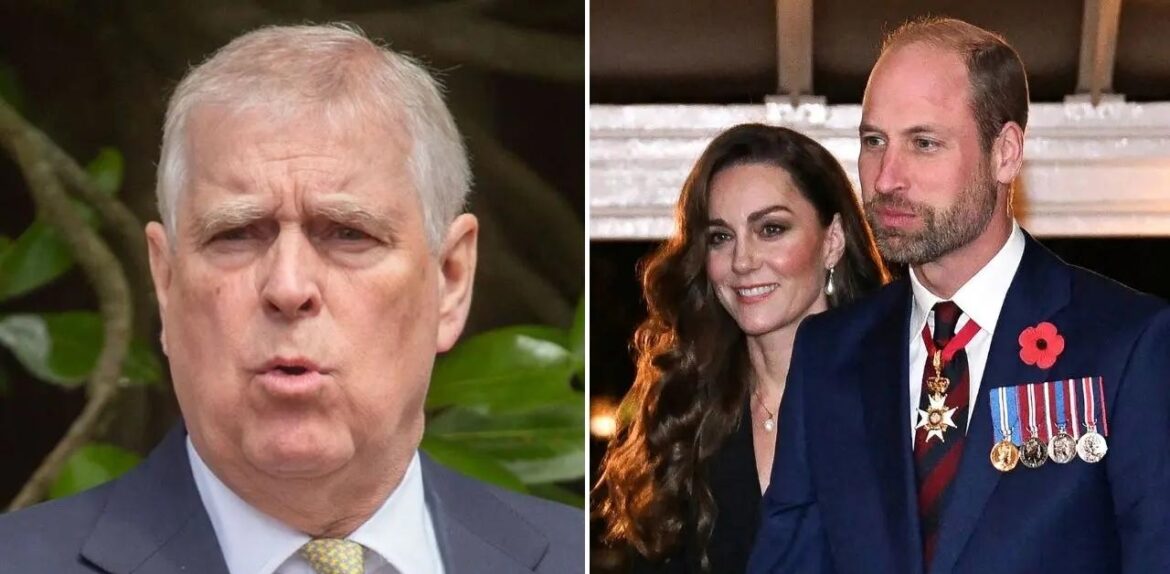
Long before the public scandals that would define his modern legacy, a significant fracture had already formed within the British Royal Family. According to royal observers, a deep-seated animosity developed between Prince Andrew and his nephew, the Prince of Wales, years prior to the former’s association with the convicted sex offender Jeffrey Epstein.
Insiders suggest the core of the conflict stemmed not from policy or duty, but from personal resentment. Analysts point to Prince Andrew’s reported jealousy regarding the widespread public admiration for Catherine, Princess of Wales. Her rapid ascent in popularity and her poised execution of royal duties are said to have rankled the Duke of York, whose own public standing had been in decline.
“At the heart of the estrangement was a profound sense of envy,” one commentator noted. “The Duke reportedly made disparaging remarks, which the Prince of Wales, known for being fiercely protective of his family, found utterly unacceptable. This led to a firm stance of zero tolerance from the heir to the throne regarding his uncle’s conduct.”
This personal friction was compounded by a shift in dynastic dynamics. Once considered a favored son of the late Queen Elizabeth II, Prince Andrew reportedly struggled with his diminished status as the spotlight turned increasingly toward the younger generation, embodied by William and Catherine. Some biographers have speculated that a sense of aristocratic snobbery may have also played a role, with Andrew allegedly viewing the Princess of Wales’s non-aristocratic background with disdain.
The situation deteriorated irrevocably with the eruption of the Epstein scandal. Following a civil lawsuit filed by Virginia Giuffre, who accused the Duke of sexual assault when she was a teenager—allegations he has consistently denied—a settlement was reached out of court. The ensuing controversy forced a dramatic retreat from public life.
In a decisive move earlier this year, and following the posthumous publication of Giuffre’s memoir which reiterated her accusations, Prince Andrew relinquished his military affiliations and royal patronages. In a statement made in consultation with the King, he announced he would no longer use his “His Royal Highness” style, stating the ongoing scrutiny had become a distraction for the monarchy. He maintained his denial of the allegations but acknowledged the necessity of stepping back for the institution’s sake.
The culmination of these personal grievances and profound public scandals has resulted in the effective exile of the Duke of York from the royal fold, a situation insiders suggest was cemented years ago by a protective future king drawing a line in the sand.